


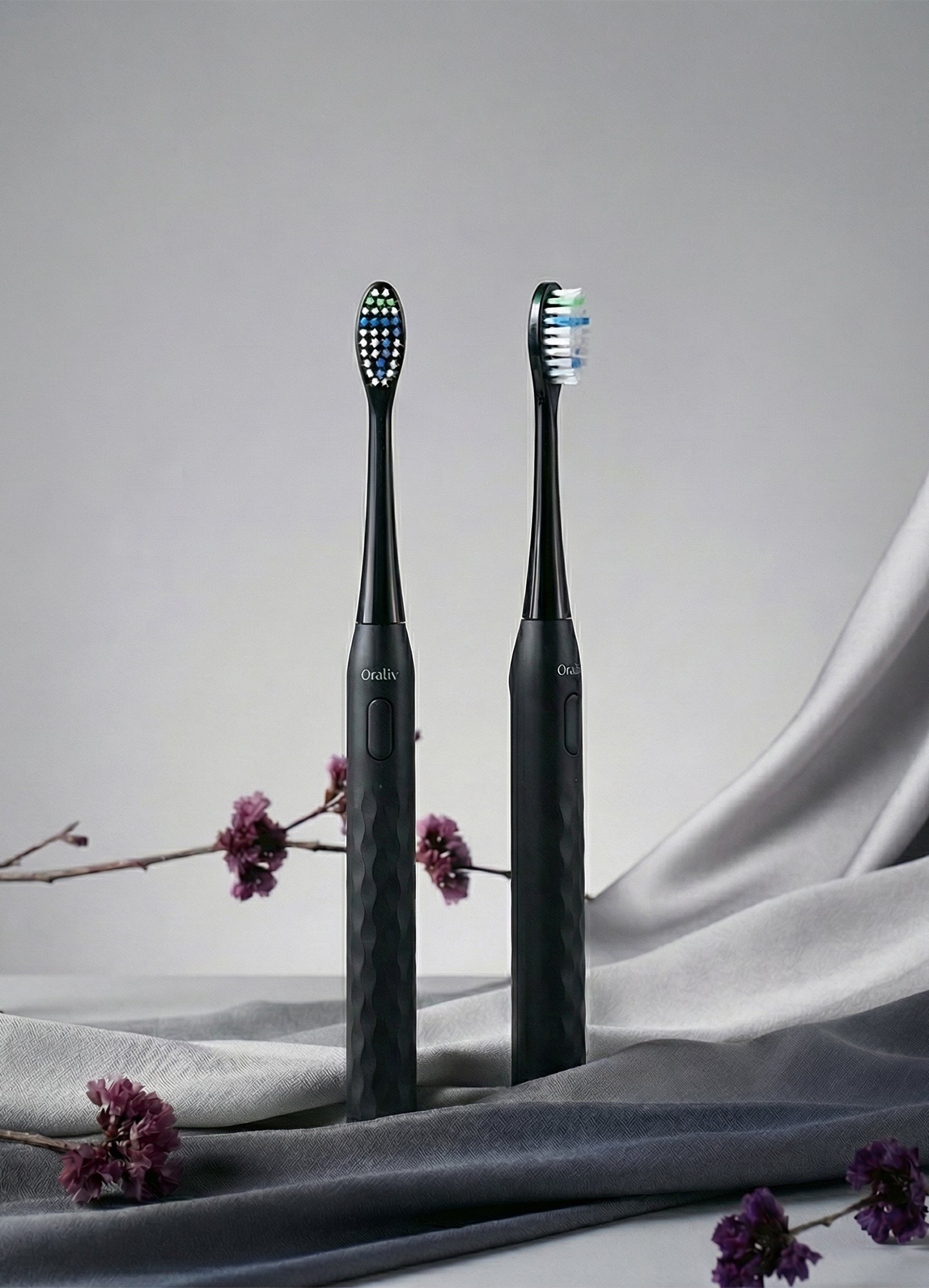


Learn whether an electric toothbrush is better for crowded teeth, how to clean overlapping areas, and which brush features and interdental tools help.
Is an Electric Toothbrush Better for Crowded Teeth?
Crowded teeth can overlap, rotate or sit partly behind neighboring teeth. Those angles create sheltered areas where plaque and food are easy to miss. If you are deciding between a manual and electric toothbrush for crowded teeth, the most useful question is not simply which brush has a motor. It is which one helps you clean every reachable surface gently and consistently.
An electric toothbrush can be a very good choice because its powered movement, small head, timer and pressure feedback may make careful brushing easier. Still, it is not an automatic solution. The brush head cannot pass through tight contact points, and no toothbrush can straighten crowded teeth. Good results depend on complete coverage, fluoride toothpaste and daily cleaning between teeth.
Quick Answer: Is an Electric Toothbrush Better for Crowded Teeth?
Often, but not always. Research in the general population shows that powered toothbrushes can reduce plaque and gingivitis more than manual brushes. For crowded teeth, the practical advantage is easier, more consistent cleaning around rotated and overlapping surfaces. A manual brush can also work well when technique is thorough, and either type must be paired with daily interdental cleaning.
Why Are Crowded Teeth Harder to Clean?
Dental crowding means there is not enough space for all the teeth to line up normally. A tooth may be rotated, tilted, pushed inward or outward, or partly hidden behind another tooth. Crowding can be mild and mainly cosmetic, or it can affect the bite and make routine oral hygiene more difficult.
Plaque is a soft, sticky film containing bacteria. It collects most readily where bristles do not contact the tooth and along the gumline. With overlapping teeth, the visible front surface may look clean while plaque remains at the side, behind the overlap or near the gum. The American Association of Orthodontists notes that misaligned teeth can be harder to clean and may allow more plaque to build up.
The goal is not to scrub harder. It is to change the brush angle, pause on each exposed surface and use a separate tool for areas the toothbrush cannot enter.
Electric vs. Manual Toothbrushes for Crowded Teeth
Both manual and powered toothbrushes can remove plaque and reduce gum inflammation when they are used correctly. The American Dental Association recommends a soft-bristled brush that fits the mouth and reaches all areas, regardless of whether it is powered or manual.
A Cochrane systematic review found modest average advantages for powered brushes in plaque and gingivitis control. That evidence applies to toothbrushing generally; it does not prove that every electric model is superior for every person with dental crowding. Your dexterity, technique, brush-head fit and willingness to brush for long enough can matter more than the price or number of modes.
An electric toothbrush may be especially helpful if you rush, have limited hand movement, press too hard with a manual brush, or find it difficult to make small controlled motions. A manual toothbrush remains a sound option if its small, soft head reaches your crowded areas and you use it methodically.
What Makes an Electric Toothbrush Helpful for Crowded Teeth?
· A compact head can be easier to position around rotated teeth and behind overlaps.
· Powered bristle movement reduces the need for a forceful back-and-forth scrubbing motion.
· A two-minute timer or quadrant pacer can reduce rushed brushing.
· A pressure sensor can warn you when you are pushing hard enough to irritate the gumline or splay the bristles.
· A comfortable routine may improve consistency, which is essential when several tooth surfaces are easy to miss.
These features support technique; they do not replace it. If the head is too large to reach a rotated tooth, or if you move it quickly across the visible fronts, powered motion will not compensate for incomplete coverage.
How to Brush Crowded Teeth With an Electric Toothbrush
1. Choose a soft, compact head. The head should fit comfortably behind the front teeth and around the last molars. Replace it when the bristles are frayed or splayed.
2. Apply fluoride toothpaste. Use an age-appropriate amount unless your dental professional has advised something different. Fluoride strengthens enamel and helps protect against tooth decay.
3. Start with the brush switched off. Place the bristles on the first tooth before turning the brush on. This improves control and reduces splatter.
4. Begin at the gumline. Hold the bristles gently where the tooth meets the gum. Pause briefly on each tooth, using light pressure rather than scrubbing.
5. Clean one surface at a time. Guide the brush along the outer, inner and chewing surfaces. Let the powered head do the motion while your hand controls position.
6. Change the angle at overlaps. Approach a crowded area from more than one direction. Angle the bristles toward the exposed edge of the partly hidden tooth, then reposition to clean the neighboring surface.
7. Turn the head vertically behind front teeth. A vertical position can make it easier to clean the narrow tongue-side surfaces of crowded incisors. Use the tip of the brush head gently.
8. Pause around rotated teeth. Clean the visible face, both accessible side edges and the gumline. Do not assume a single pass has reached every angle.
9. Clean the chewing surfaces. Guide the bristles into the grooves of the back teeth without pressing hard.
10. Do not force the head between teeth. A toothbrush is not designed to pass through tight contacts. Use floss or another professionally recommended interdental aid instead.
11. Brush for at least two minutes. Take longer if needed to cover every surface. A timer is a minimum guide, not a signal to stop before crowded areas are clean.
12. Spit, then clean the brush head. Follow your dental professional’s advice about rinsing after fluoride toothpaste. Rinse the detached brush head separately and let it air-dry upright.
How Do You Clean Overlapping Teeth?
Clean overlapping teeth from several directions. First brush along the gumline. Then approach the visible edge of the partly hidden tooth from the front, side and tongue side as access allows. A single-tufted brush—a small brush with one compact bundle of bristles—can help target a narrow surface that the main head does not contact well.
Do not wedge an electric head under an overlap or push until the bristles bend sharply. That can irritate the gums without cleaning the hidden contact. The space between two touching teeth requires floss or another suitable interdental method.
Which Electric Toothbrush Features Matter Most?
· Soft bristles: firm pressure and stiff bristles are not needed for effective plaque removal.
· Small brush head: compact dimensions often improve access around crowded incisors and back teeth.
· Pressure sensor: useful if you tend to push hard, although it is not essential.
· Two-minute timer: helps establish a complete routine, especially when divided into mouth sections.
· Sensitive mode: may improve comfort if gums are tender, provided brushing remains thorough.
· Available replacement heads: a practical advantage because worn bristles clean less effectively.
There is no single best electric toothbrush for crowded teeth. Choose a safe, comfortable brush whose head reaches your difficult areas. A dental hygienist can watch your technique and tell you whether the head shape is working in your mouth.
Do You Still Need Floss or an Interdental Brush?
Yes. Even the best toothbrush cannot fully clean the tight spaces where neighboring teeth touch. The ADA recommends cleaning between teeth daily. Crowding can make this step more awkward, but it also makes a deliberate plan more valuable.
Dental floss
Floss is often the best option for a tight contact. Guide it gently between the teeth, curve it into a C shape around one tooth and move it against the side of the tooth, then repeat against its neighbor. Do not snap it into the gum.
Interdental brushes
An interdental brush can clean an open space between teeth, but it should fit without force. It may not pass through a tight crowded contact. Ask a dentist or hygienist to select the size and demonstrate the angle, because using an oversized brush can traumatize the gum.
Water flossers
A water flosser may help remove debris and can be easier for some people to use. It is an adjunct, not evidence that every contact surface is plaque-free. Ask your dental professional how it should fit into your own routine.
Single-Tufted Brushes
A single-tufted or end-tuft brush can target a tooth that sits behind another tooth, a crowded gumline or the back of the last molar. Use it after the main toothbrush to clean a specific missed area with small, gentle movements.
How Often and How Long Should You Brush Crowded Teeth?
Brush twice a day for two minutes with fluoride toothpaste, following the general ADA recommendation. Crowded teeth may require more than two minutes if you need extra passes around overlaps. Completeness is more useful than speed.
Clean between the teeth once a day. Choose a time when you are least likely to rush. If your dentist has prescribed a particular fluoride product or given instructions based on active decay, gum disease, dry mouth or another condition, those individualized instructions take priority.
Common Brushing Mistakes With Crowded Teeth
· Pressing harder when a tooth is difficult to reach instead of changing the angle.
· Gliding quickly across the visible front surfaces and missing the tooth behind an overlap.
· Ignoring the tongue-side surfaces of crowded front teeth.
· Stopping as soon as the timer ends even though difficult areas remain.
· Using a large or worn head that cannot reach narrow spaces effectively.
· Assuming powered movement cleans between tight tooth contacts.
· Forcing interdental brushes into spaces that are too narrow.
· Avoiding an area because it bleeds, without checking pressure or seeking professional advice.
Can an Electric Toothbrush Damage Crowded Teeth or Gums?
An electric toothbrush used with soft bristles and gentle pressure should not damage crowded teeth simply because they are misaligned. Problems are more likely when a person presses hard, scrubs while the head is already moving, uses damaged bristles or repeatedly pushes into tender tissue.
Crowding can make the gumline uneven, so pay attention to pressure as you move from one tooth to the next. Stop if brushing causes sharp pain or a tooth feels newly mobile. Persistent discomfort deserves a dental assessment rather than stronger brushing.
What If Your Gums Bleed When You Brush?
Mild bleeding can occur when plaque has inflamed the gums, and it can also occur if you use too much pressure. Do not diagnose the cause yourself or abandon cleaning. Use a soft head, lighten your pressure and continue gentle plaque removal at the gumline.
Arrange dental advice if bleeding is persistent, frequent, heavy, painful or worsening, or if you also notice swelling, pus, a bad taste, receding gums or loose teeth. Seek urgent help for uncontrolled bleeding, major swelling, or difficulty breathing or swallowing.
Can an Electric Toothbrush Fix Crowded Teeth?
No. A toothbrush removes plaque; it does not move teeth into alignment. Orthodontic treatment such as braces or clear aligners may be considered when crowding affects appearance, bite, comfort or cleanability. Treatment is not necessary for every minor irregularity, so an examination is the right way to assess the benefit and options.
When Should Crowded Teeth Be Checked Professionally?
Ask a dentist or orthodontist for an assessment if you have:
· Repeated food trapping or an area you cannot keep clean.
· Persistent bleeding, swelling, gum tenderness or bad breath.
· New cavities or visible plaque around overlapping teeth.
· Pain, uneven wear, biting difficulty or a tooth that injures the cheek or gum.
· Concern that crowding is worsening or affecting the eruption of a child’s permanent teeth.
A dentist can check for decay and gum disease and show you where plaque remains. An orthodontist can evaluate alignment and bite. Sometimes a change in technique or cleaning tools is enough; in other cases, orthodontic treatment may make long-term cleaning easier.
Frequently Asked Questions
Is an electric toothbrush good for crooked teeth?
Yes. It can clean crooked or rotated teeth effectively when you use a small, soft head and pause on each reachable surface. It still cannot clean through tight contacts or correct the tooth position.
Is a sonic or oscillating toothbrush better for crowded teeth?
Evidence does not support choosing solely by the word “sonic” or “oscillating.” Head size, comfort, pressure control and your ability to reach each surface are more practical considerations. Ask your dental professional to check your results.
Should you brush harder around overlapping teeth?
No. Hard pressure can bend the bristles away from the area you want to clean and may irritate the gum. Reposition the head, use light contact and add a single-tufted or interdental tool when appropriate.
What is the best brush head for crowded teeth?
A soft, compact head is usually easiest to position around overlaps and behind front teeth. The best fit varies with mouth size and the location of the crowding.
Can an electric toothbrush clean between crowded teeth?
It cleans the exposed outer, inner and chewing surfaces, but it cannot fully clean tight contact areas. Use floss or another dental-professional-recommended interdental method every day.
How can you tell whether crowded teeth are clean?
Use good light and check the gumline and hidden edges for visible plaque or food. Plaque-disclosing products may help when used as directed. A dental hygienist can identify missed areas more reliably.
Can children use an electric toothbrush for crowded teeth?
Many children can use an age-appropriate powered toothbrush, but they may need supervision or help to reach every area. Follow the manufacturer’s age guidance and the child’s dentist’s advice.
How often should an electric toothbrush head be replaced?
Replace it according to the manufacturer’s instructions and sooner if the bristles are frayed, splayed or damaged. Inspect it regularly because worn bristles may not contact irregular surfaces well.
Do crowded teeth always need braces?
No. The need for treatment depends on cleanability, bite, tooth health, appearance, age and personal goals. A dentist or orthodontist can explain whether monitoring or treatment is appropriate.
Final Takeaway
An electric toothbrush can be better for crowded teeth when it helps you slow down, control pressure and reach rotated or overlapping surfaces more consistently. It is not automatically better than a well-used manual brush, and it cannot clean every space between teeth. Use a soft compact head, fluoride toothpaste, gentle pressure, several brush angles and daily interdental cleaning. If an area remains difficult to clean, ask a dentist or hygienist to show you a technique that fits your teeth.